
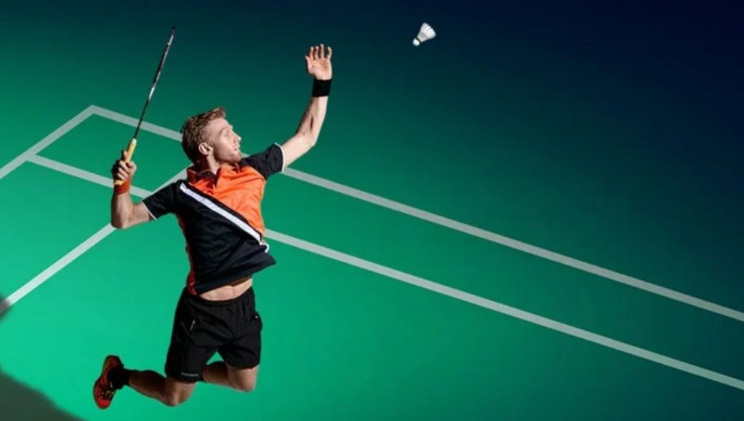
Badminton is a very popular sport in Indonesia, both as a recreational sport and for competitive purposes. Public enthusiasm for badminton is predicted to continue to grow in 2026, as sports facilities and training technology become more accessible. However, for beginners, mastering proper technique is the foundation for effective play and avoiding injury. Learning basic badminton techniques for beginners to quickly become proficient in 2026 requires discipline and a sound understanding of biomechanics. Here’s a comprehensive guide to the basic techniques you need to master to improve your game.
Correct Racket Holding Technique (Grip)
The first step in learning badminton is understanding how to properly hold the racket. Mistakes at this stage will significantly slot gacor gampang menang hinder the development of other stroke techniques. There are two main grips to master: the forehand grip and the backhand grip .
The forehand grip is performed with the hand in a handshake position. The thumb should not be flat on the racket handle, but rather at an angle to maintain wrist flexibility. Meanwhile, the backhand grip is performed by slightly rotating the racket and positioning the thumb as the primary support on the flat part of the handle to provide thrust. Mastering basic badminton techniques for beginners to quickly become proficient in 2026 depends heavily on the player’s ability to quickly change grip positions during a rally.
Basic Footwork Techniques (Foot Movements)
Many beginners focus too much on their hand strokes, forgetting that badminton is a sport of footwork. Efficient footwork allows a player to reach every corner of the court with minimal effort and maximum speed. The key principle of footwork is to always return to the center of the court after hitting a shot.
Footwork drills involve sideways movements, wide lunges, and agile jumps. With coordinated footwork, you’ll always be in the right position to hit the shuttlecock . Mastering basic badminton techniques for beginners to quickly become proficient by 2026 requires repetitive practice so that the leg muscles develop motor memory and reflexes when chasing the ball in front, to the side, and behind.
Basic Service Techniques
The serve is the beginning of each point in a match. There are two common types of serves: the short serve, typically used in doubles, and the high serve , typically used in singles.
A good serve must be accurate and difficult for the opponent to return. When serving, foot position and consistency of racket contact with the shuttlecock significantly determine the ball’s direction. Mastering basic badminton techniques for beginners to quickly master them means dedicating dedicated time to practicing your serve independently to develop a variety of attacks from the first second of the rally.
Clear Overhead Shot Technique (Lob)
The aim of a clear or lob shot is to launch the shuttlecock as high as possible towards the opponent’s back line. This shot is crucial for setting the pace of play and forcing the opponent away from the net. A successful lob shot relies on coordination between waist rotation, shoulder swing, and wrist flick.
When executed correctly, this shot gives you time to return to the center of the court. Learning basic badminton techniques for beginners to quickly master 2026 involves practicing swing strength so the ball can reach the opponent’s back line without excessive force, thus maintaining your stamina throughout the match.
Smash Punch Technique (Main Attack)
The smash is the most devastating offensive shot in badminton. It’s executed by hitting the shuttlecock as hard as possible in a sharp, downward arc toward the opponent’s court. The power of the smash comes not only from arm strength but also from the transfer of energy from the legs, waist, and shoulders, exploding at the highest point of contact.
For beginners, it’s highly recommended to focus on accuracy and angle before adding full power. Mistakes in smash technique often lead to shoulder injuries. Therefore, understanding basic badminton techniques for beginners to quickly master them by 2026 includes understanding the proper timing of the jump and swing for maximum and efficient results.
Dropshot Technique and Netting Game
In addition to powerful shots, badminton also requires delicate touches through dropshot and netting techniques . A dropshot is a shot aimed narrowly over the net and landing in front of the opponent’s court. Meanwhile, netting is done very close to the net with the goal of making the ball roll over the edge of the net, making it difficult to return.
Both techniques rely heavily on feel and wrist control. Learning basic badminton techniques for beginners to quickly master them means you must train your hand sensitivity to suddenly shift the power of your swing from a powerful shot to a soft, deceptive touch.
Conclusion
Becoming a skilled badminton player takes time, patience, and measured practice. By understanding and consistently practicing the basic techniques of playing badminton for beginners to become proficient quickly 2026, you will have a strong foundation to compete at a higher level. Be sure to always warm up before practicing to maintain joint and muscle flexibility. Consistency in honing basic techniques is the main key to true proficiency on the court.

