
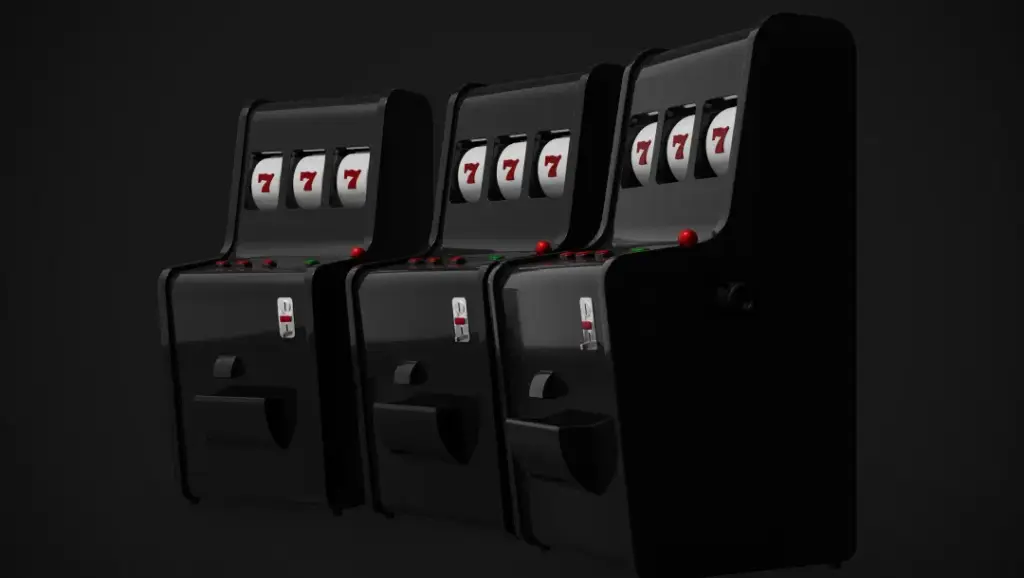
At first glance, online slots and sports games may seem to belong to completely different worlds. Demo slots take place on digital reels, while sports games may unfold on a football field, basketball court, baseball diamond, or gaming console. Look a little closer, however, and the similarities become surprisingly clear.
Both forms of entertainment are built around anticipation, recognizable rules, memorable moments, and the excitement of seeing what happens next. They also reward people who take time to understand how the experience works before jumping in.
That is where demo play becomes especially useful. Just as a sports fan might watch warm-ups, study a team’s formation, or practice a video game before entering a competitive match, a slot player can use a demo version to explore the rules and features without immediately committing real money.
Both Begin With Learning the Rules
Every sport has a structure. Football has downs, basketball has shot clocks, baseball has innings, and tennis has its distinctive scoring system. These rules create order and allow players and spectators to understand what is happening.
Online slots also have rules, although they are usually presented through symbols, paylines, multipliers, wilds, scatters, bonus rounds, and other game-specific features.
A newcomer who starts playing without understanding these elements may miss much of the experience. Demo mode provides an opportunity to examine a game at a comfortable pace. Players can learn
- What the main symbols represent
- How winning combinations are formed
- Whether the game uses paylines, clusters, or ways-to-win mechanics
- How wild and scatter symbols function
- What activates free spins or bonus rounds
- Whether special features appear randomly or after a specific trigger
The same principle applies to sports games. Someone playing a football simulator for the first time will usually benefit from learning the controls before joining an online match. A basketball player practices shooting mechanics before attempting a game-winning shot. Preparation does not guarantee a particular result, but it makes the experience easier to understand.
Demo Mode Is the Gaming Equivalent of Practice
Athletes rarely walk into an important competition without training. They repeat movements, test strategies, study opponents, and develop confidence through practice.
Demo slots offer a comparable form of preparation. They allow users to become familiar with a game’s pace and mechanics using virtual credits rather than real funds.
A player exploring a collection of demo slots can compare different themes, formats, bonus features, and gameplay styles before deciding whether a particular title is enjoyable. The main value is not predicting future outcomes. Slot results remain random. Instead, demo play helps users understand the entertainment experience itself.
This distinction is important. Practice can improve skill in many sports because player decisions directly affect performance. Demo play cannot teach someone how to control a random slot result. It can, however, show how quickly the game moves, how frequently features appear during a sample session, and whether the design is engaging enough to hold the player’s attention.
The Key Similarities at a Glance
| Feature | Demo Slots | Sports Games |
| Learning stage | Players explore symbols, rules, and bonus mechanics | Players learn controls, rules, and tactics |
| Practice environment | Virtual credits allow risk-free exploration | Training modes and friendly matches build familiarity |
| Uncertainty | Outcomes are generated randomly | Outcomes depend on performance, decisions, and unpredictable events |
| Progress feedback | Wins, features, animations, and bonus rounds | Scores, rankings, statistics, and achievements |
| Entertainment value | Themes, sound effects, visual effects, and suspense | Competition, atmosphere, teamwork, and dramatic moments |
| Strategic value | Helps users choose games they enjoy, but cannot influence random outcomes | Strategy and skill can directly influence performance |
| Social element | Players discuss games, features, and memorable rounds | Fans discuss teams, athletes, rivalries, and major plays |
The table also highlights an essential difference: sports usually contain a significant skill component, while slot outcomes are determined by random game systems. That difference should never be ignored when comparing the two.
Both Create Anticipation
One reason people follow sports is the tension created before an important moment.
Will the quarterback complete the final pass? Will the basketball player make both free throws? Will the goalkeeper stop the penalty? The answer is not known until the play is completed.
Slot games also use anticipation as a central entertainment device. Reels spin, symbols land one by one, and animations draw attention to potential combinations. Bonus features may introduce additional rounds, changing symbols, multipliers, or other mechanics that extend the action.
This sense of “what happens next?” is one of the strongest connections between sports entertainment and digital games.
However, the source of uncertainty is different. In sports, the result may be influenced by training, fatigue, tactics, weather, teamwork, and individual decisions. In slots, the outcome is generated by the game’s random number system. Watching previous spins cannot reliably reveal what the next spin will produce.
Statistics Matter in Both Worlds—But Differently
Modern sports fans love statistics. They compare shooting percentages, passing yards, batting averages, player efficiency ratings, possession numbers, and dozens of other metrics.
Slot games also present numerical information, including return-to-player percentages, volatility levels, maximum win figures, and the number of paylines or winning combinations.
These statistics can help explain how a game is designed, but they must be interpreted correctly.
Common slot information includes:
- RTP: A theoretical percentage calculated across a very large number of game rounds. It does not predict the result of a short individual session.
- Volatility: A general indication of how a game distributes its theoretical payouts. Lower-volatility titles typically aim for more frequent but smaller results, while higher-volatility games may produce less frequent and more variable results.
- Paylines or ways to win: The system used to identify winning symbol combinations.
- Maximum win: The largest theoretical result permitted by the game’s rules, not an expected or guaranteed outcome.
- Bonus mechanics: Special features such as free spins, multipliers, expanding symbols, or collection systems.
In sports, statistics are often used to evaluate past performance and make informed tactical decisions. In slots, game statistics describe the mathematical structure of the product. They should not be treated as a formula for guaranteed winnings.
Themes and Storytelling Keep Players Interested
Sports are about more than final scores. Fans become invested in personalities, rivalries, comeback stories, underdogs, championship runs, and unforgettable moments.
Digital games use storytelling in a similar way. A slot may be designed around ancient mythology, animals, adventures, fantasy worlds, classic fruit machines, or even sports-inspired settings. Music, character design, animation, and visual effects help create a recognizable identity.
This matters because entertainment choices are personal. One player may prefer simple, fast games with familiar symbols. Another may enjoy feature-rich titles with detailed animation and several bonus stages.
Demo mode allows users to explore these differences before making any financial decision. In that sense, it works like watching highlights or trying a sports game tutorial: it helps people determine whether the experience suits their preferences.
Immediate Feedback Drives Engagement
Sports games constantly provide feedback. A successful pass moves the team forward. A missed shot changes possession. A strong defensive play can shift momentum. Scoreboards and statistics make progress visible.
Demo slots also provide immediate feedback through:
- Symbol combinations
- Credit changes
- Feature triggers
- Sound effects
- Animations
- Multipliers
- Bonus-round progress
This rapid feedback can make both experiences highly engaging. It is also why setting personal limits is important when moving from free play to real-money gaming. Fast feedback can make time pass more quickly than expected.
Demo mode is useful for evaluating this pace. A player may discover that a particular game feels too fast, too complex, or simply less entertaining than expected. That information can be valuable before any real-money session begins.
What Demo Slots Cannot Teach You
The comparison with sports practice has limits.
Practicing free throws can improve a basketball player’s accuracy. Studying defensive formations can improve a football team’s decision-making. Repeating a racing-game circuit can help a player achieve a faster time.
Playing a slot repeatedly in demo mode cannot improve the odds of the next random result. It also cannot prove that a real-money session will unfold in the same way.
Demo sessions should therefore be used to understand:
- Game rules
- Visual presentation
- Session speed
- Bonus mechanics
- Sound and animation
- Personal entertainment preferences
They should not be used to develop a “winning system.” Patterns observed during a limited number of demo spins do not change the underlying probability of future rounds.
Why Sports Fans May Enjoy Demo Slots
Sports fans are already familiar with competition, suspense, statistics, and rapidly changing action. Those interests can make certain digital games appealing, particularly when the games include clear rules and an energetic presentation.
Some fans may use demo slots as a brief form of entertainment during halftime, between matches, or after a major event. Others may simply be curious about how online slot mechanics work.
The advantage of demo mode is that it gives users space to explore without the financial pressure associated with real-money play. It turns the first interaction into a product test rather than an immediate wager.
Before choosing a game, users can ask:
- Are the rules easy to understand?
- Is the theme interesting?
- Does the game work smoothly on mobile?
- Is the pace comfortable?
- Are the sound effects enjoyable or distracting?
- Are the bonus features clear?
- Would the game remain entertaining without focusing only on potential payouts?
These questions encourage a healthier, entertainment-first perspective.
Responsible Play Is Always Part of the Game Plan
Successful athletes rely on discipline. They follow schedules, manage energy, and know when to stop training. A responsible approach to gaming requires similar boundaries.
Anyone moving from demo mode to real-money slots should establish clear limits in advance. Useful precautions include setting a fixed entertainment budget, deciding how long the session will last, and never using money needed for bills, food, housing, savings, or other essential expenses.
Players should also avoid chasing losses. A losing session does not make a future win more likely, and increasing stakes does not force the game to produce a favorable outcome.
Most importantly, online slots should be viewed as paid entertainment, not as a reliable way to earn income. Demo games can help users understand the product, but they do not remove the financial risks associated with real-money gambling.
Final Thoughts
Demo slots and sports games share several qualities: structured rules, anticipation, instant feedback, strong visual presentation, memorable moments, and a learning phase that helps newcomers understand the experience.
The biggest similarity is the value of preparation. Athletes practice before competition, video gamers use tutorials before ranked matches, and slot players can explore demo versions before considering real-money play.
The biggest difference is control. Skill, tactics, and physical performance can influence a sporting result. Slot outcomes remain random, regardless of how much experience a person has.
Used correctly, demo slots are not a prediction tool or a shortcut to winning. They are a practical way to examine game mechanics, compare titles, understand terminology, and decide whether the experience is entertaining. For curious sports fans, that makes demo mode the ideal warm-up before deciding whether to enter the game at all.
Real-money gambling is intended only for adults of legal gambling age. Availability and regulations vary by jurisdiction. Play responsibly and seek support if gambling stops feeling like entertainment.